LOGIN
LOGIN
.svg "SuitePadLogo_White(1)")
.png?width=44&height=44&name=Bastien%204x4%20(11).png)

This blog explores how hotels can design personalized guest journeys for families, couples, and business travelers using AI in the background, improving the guest experience while simplifying daily operations.
Every guest arrives with different expectations. A family on vacation, a couple on a romantic getaway, and a business traveler on a tight schedule all experience your hotel in very different ways.
Yet for hotels, the challenge is the same. It is delivering a consistent, personalized guest journey without adding operational complexity or increasing staff workload.
While it is easy to say this out loud, making it work efficiently is a challenge altogether. Hotels need a smart, AI-supported guest journey that makes this possible. The one that works quietly in the background and without changing how hotel teams work in the best way.
In this blog we will imagine 3 guest journeys and talk about how different AND similar they are, as well as how this personalization not only affects the guest but also the team behind the journey. Let’s dive in!
The Family Stay: Convenience From the First Night
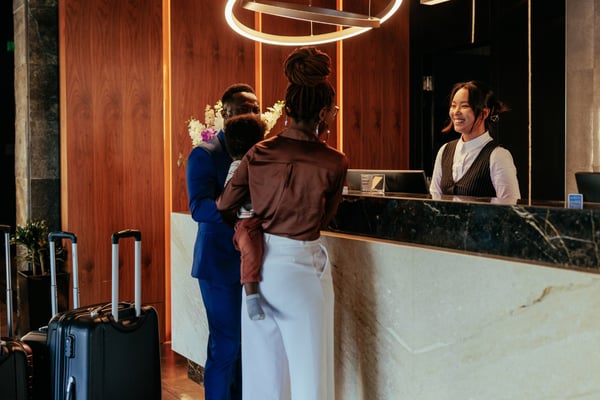 The family arrives mid-afternoon, luggage in tow, children, as well as the parents, already tired from the journey. Check-in is done, but since the desk was crowded and the family distracted, they did not ask the important questions. So when they enter the room, the practical questions arise. What time is breakfast tomorrow? Can housekeeping come later so the kids can nap? Is it possible to get an extra towel, or a crib, without heading back downstairs.
Like business travelers, families value efficiency. But for different reasons. Their days follow a rhythm that rarely fits standard schedules. Mornings start early, afternoons are quiet, evenings unpredictable. They want flexibility without feeling like they are constantly asking for exceptions. Every small decision, from the cleaning times to service requests to planning what to do the next day, should feel simple and intuitive. And honestly, they can use some extra personalized help.
What families expect is clarity and reassurance that the hotel understands their situation. Because the PMS already identifies the booking as a family stay, relevant information can be prioritized automatically. Breakfast times, flexible housekeeping options, and family-friendly amenities appear first, while suggestions for suitable on-property or nearby activities are aligned with the length and timing of the stay. AI-supported guest communication builds on this existing data to adapt the journey in real time, delivering what matters most without staff intervention, reducing friction for guests while easing the operational load on hotel teams.
The Romantic Couple: Thoughtful Personalization Without Pressure
Where families focus on convenience, the romantic couple moves at a slower pace. They arrive without a strict agenda and little urgency to unpack. Once in the room, attention shifts from logistics to atmosphere.Over the stay, decisions are made spontaneously. Housekeeping may be skipped for privacy, breakfast might linger longer, and a spa visit or dinner reservation often becomes a last-minute choice. Their journey is shaped by mood rather than structure. They may value flexibility like the families do, but in a different form.
As the stay continues, the couple appreciates what doesn’t happen just as much as what does. There are no unexpected calls from reception, no knocks on the door at the wrong moment, no need to explain their preferences to staff. When they want privacy, they simply choose it, and the room responds accordingly. Housekeeping stays out of the way, information remains available without being intrusive, and the experience stays quiet unless they decide otherwise.
In this context, AI supports the guest journey by knowing when not to communicate. Based on how the couple interacts with the in-room interface, what they open, skip, or adjust, the content remains minimal and relevant. The result is a stay shaped by the couple’s choices, not human interruptions, preserving privacy and atmosphere while keeping hotel operations running smoothly in the background.
The Business Traveler: Efficiency and Control
The business traveler arrives with a mindset closer to the family than the couple, but with far less flexibility. Often arriving late, their focus is efficiency, not exploration. Once in the room, priorities are clear: confirm Wi-Fi access, check breakfast times, and prepare for the next day.
Like families, business travelers want clarity and control. Unlike couples, they have little tolerance for interruptions. Their stay follows a tight routine, early mornings, short evenings, and minimal interaction.
What business travelers expect is speed and predictability. AI-supported guest journeys help by filtering information and options to what’s relevant at each stage of the stay. For hotels, this reduces routine inquiries and keeps interactions efficient, without compromising service quality.
What This Means for Hotel Teams
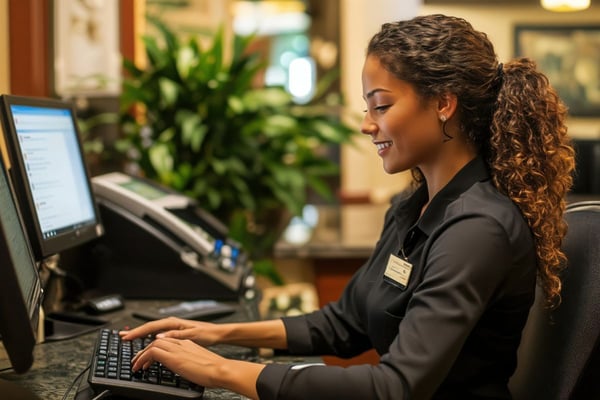 For hotel teams, personalization only works if it simplifies operations rather than complicates them. AI creates value when it supports teams quietly in the background, not when it adds another system to manage.
When applied with a clear goal, AI-supported guest journeys help reduce repetitive guest questions, make housekeeping schedules more predictable, prioritize requests more efficiently, and keep communication consistent across shifts and properties. Service awareness increases without additional training, upselling becomes more relevant, and dependency on individual staff knowledge is reduced. At the same time, teams gain clearer insights into guest behavior and stronger coordination between departments.
The most effective tools are those that fit naturally into existing workflows, such as in-room tablets or guest-facing apps with AI assistants and PMS integrations. These tools guide guests through their stay, adapt service options based on timing and behavior, support front desk and housekeeping planning, and provide meaningful operational insights for management.
What matters most is not how advanced the tool sounds, but how clearly it supports a defined operational goal.
A Final Thought
Families, couples, and business travelers experience hotels differently, but they all expect the same outcome: a stay that feels easy, personal, and well-timed.
When hotels design guest journeys with intention and support them with AI in the background, personalization becomes scalable, operations become calmer, and service becomes more consistent. The most effective guest journeys are not the loudest ones, but the ones that simply work.
Published on 5 January 2026
See how in-room feedback prevents bad reviews at your hotel.
20-minute demo, tailored to your room count and guest profile. No commitment.