Customer Login
.svg "SuitePad")
On 28 September 2026, Booking.com stopped putting guest phone numbers into the reservation data it sends to property management systems and channel managers. Every market, every property, and it covers new bookings, changes and cancellations alike. Numbers that already reached your system stay there. Nothing new arrives.
This is not a European privacy rule, and it is not temporary. It applies everywhere Booking operates.
Booking's reason is fraud, and it's a real one. Guests have been receiving texts and WhatsApp messages carrying genuine booking details, pressing them to pay again to secure a stay they already paid for. The fewer systems that hold the number, the fewer places it can leak from. After the booking data incident Booking confirmed in April, that logic is hard to argue with.
Which doesn't change what it does to your operation.
What Goes quiet with this
Think about every message your hotel sends by SMS or WhatsApp after a guest books through Booking.com. There's the automated welcome, the arrival and parking details that go out the evening before, the offer for an early check-in, the quick call you make when someone is landing at 1am, and the review request once they've checked out.
 The tricky part is that none of this tells you when it stops working. You don't get an error or an alert, and nothing shows up in a report. The messages just quietly stop going out, and usually the first time you notice is when something goes wrong at the front desk, like a guest who never received their door code, a late arrival nobody was able to reach, or a review request that simply never got sent.
Before anyone on your team opens a support ticket, there's one thing worth knowing. If you've noticed fewer guest phone numbers coming through since late September, it's very likely not your PMS vendor breaking something, so it makes sense to check which channel those bookings came through first.
What still works
Booking's own guest messaging, unchanged. The masked guest email address, unchanged. Scheduled welcome notes, check-in details and reminders all still go out through Booking without a phone number anywhere. And the number itself is still visible per booking in the extranet and the Pulse app, for the cases where a human needs to pick up the phone.
So the data wasn't deleted. It is just that he automatic path to it was closed.
This isn't new, it's just visible now
The guest email address on a Booking reservation has been an alias for years. It works, it isn't the guest's address, and it expires seven days after check-out. You get fourteen days to reply. The message thread disappears after a year.
Expedia went further earlier. Masked phone as +1 ********, alias email on @m.expediapartnercentral.com, and partner access to the conversation ending 45 days after check-out. Their stated reason is the one Booking gives now.
What all of this amounts to is a lease. You hold your guest's contact details for the length of the stay plus a short grace period, on terms set by a company competing with you for that guest's next booking. The terms can change on any Monday, in any market, without your agreement.
And the fraud argument, true as it is, isn't the whole of it. A guest a hotel can reach directly is a guest who can be invited back directly. A guest it can only reach through the platform's inbox is a guest the platform keeps. The expiry dates on every alias point the same way.
What a GM should do this week
 Pull the list of every automated message your house sends by SMS or WhatsApp and mark which ones are triggered by a phone number from the reservation. That list is your exposure, and in most houses nobody has ever written it down.
Then decide where you ask the guest for a number yourself. The confirmation page, the online check-in form, the front desk. Be honest about the last one. Collecting a mobile number from every arrival, every shift, is a discipline few front offices sustain past the first busy weekend, and the advice to simply do it anyway is being handed out by people whose product stops working without it.
Why we care about this
We're SuitePad, and we put tablets in hotel rooms. So read this knowing where we stand.
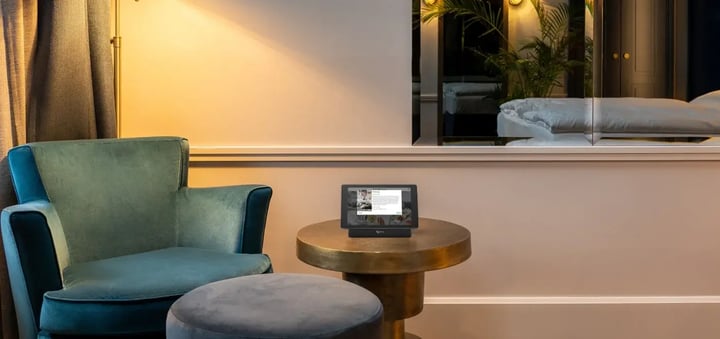
The screen in the room doesn't need a phone number, an email alias or a consent flag. It reaches the guest because the guest is standing in the room. It doesn't know or care whether the booking came through Booking.com, Expedia, your own website or an AI agent that didn't exist last year. Hardware, software and service come from one place, and whether that channel still works next quarter is your decision.
Phone numbers, email addresses and message threads will keep getting narrower. Every platform between you and your guest has a reason to shorten the connection, and a security story that makes it hard to object.
Owning your guest communication doesn't mean hoarding more guest data. It means owning one channel that works without any which is the room itself.
SuitePad is the guest communication platform for hotels: in-room tablets that replace the hotel phone, enable self-service, and pay for themselves through revenue share. Used by 800+ hotels worldwide.
See how in-room feedback stops bad reviews before they happen.
A 20-minute demo tailored to your room count and guest profile. No commitment.