Customer Login
.svg "SuitePad")
No guest wakes up, looks around the room, and thinks: today's the day I skip my cleaning. Let me find the QR code.
It doesn't happen. Even guests who would happily opt out of housekeeping don't, because the effort is too high. They won't scan anything. They won't navigate a mobile site. They walk out and forget, and you pay to clean a room that didn't need it.
This is the core problem with in-room digital engagement. Hotels put the right service in front of the guest in the wrong format, then wonder why adoption is low.
Why QR codes only work for menus
QR codes do one thing well: get a URL off a physical surface. They're fine for a restaurant menu, where the guest is already seated and already thinking about food. The effort of scanning is small next to the task.
For everything else hotels want, like skipping housekeeping, ordering room service, or booking a spa treatment, QR codes add friction at the worst moment. The guest is thinking about something else. Their phone is in a pocket or charging across the room. The action takes several steps.
We compared QR code usage with in-room device usage across many properties. The typical result is 20 to 30 times more engagement on a device that sits in the room than on a QR code the guest has to seek out. One property logged 700% more interactions on the device than on its previous QR code setup in the same rooms.
That's not a small gap. It's the difference between a channel that works and one that merely exists.
The smart TV problem
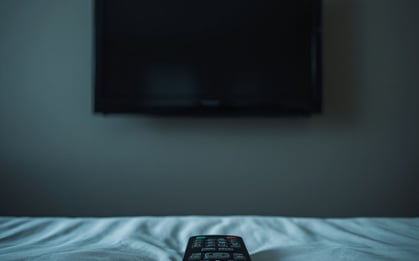 Some hotels try smart TV platforms for in-room engagement. The logic seems sound: every guest uses the TV, so why not put upsells and service menus there?
Here's the test. If the TV were a great tool for buying things, we'd all be shopping on Amazon through our TVs at home. We're not. Browsing and deciding with a remote is simply unpleasant.
Typing an email to join a loyalty program with a remote does not happen. Picking a room service add-on, choosing a spa slot, adding a dessert: none of it works with arrow buttons and a select key. The TV is great for watching. For everything else, it's a worse touchscreen that's 12 feet away.
What about the hotel app?
Major brands like Marriott, Hilton, and Hyatt have built strong apps, and adoption is real for them. But two things limit any app's reach, even for the biggest chains.
First, only about 20 to 25% of members actually have the app installed. Even where loyalty penetration is high, the app reaches a fraction of guests. The rest call the front desk.
Second, for independent hotels, soft brands, and smaller chains, the math is worse. A guest staying one night at a 4-star independent isn't downloading an app. App download rates at individual properties sit around 10 to 15% of guests.
That means 85 to 90% of your guests arrive with no digital channel to reach them, except the phone.
What actually works
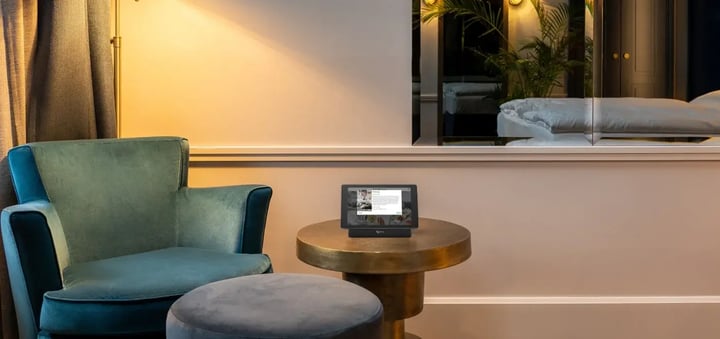
A device that's already in the room, already on, and needs nothing from the guest except a pick-up.
The difference sounds small. It isn't. Remove the steps of pulling out a phone, scanning, loading a page, and navigating, and engagement jumps. The guest picks up the device because it's there, the screen is on, or they want to turn on the TV and this is the remote.
Once it's in their hands, everything changes. They see the housekeeping opt-out. They scroll past the spa menu. They notice the late checkout offer. None of that happens with a QR code on the desk.
We consistently see 70 to 80% of guests engaging with an in-room device during their stay. No QR code, app, or smart TV comes close. And it pays off: 15 to 25% higher room service order values than phone orders, housekeeping savings reaching $7,000+ per month at one property, and EUR 200,000 in in-room revenue in a single season at another, all from upsells guests wouldn't have started themselves.
It's not about format. It's about friction.
Every digital channel hotels try fails for the same reason: it asks the guest to do something. Reach into a pocket, scan, download, navigate. At the moment you need them to act, that effort is too much.
The fix is to remove the step. Put the right prompt in front of the right guest at the right moment, on a device they'll pick up anyway, without making them start anything.
That's not technology for its own sake. It's knowing where guest decisions happen, and being there for them.
SuitePad is the guest communication platform for hotels: in-room tablets that replace the hotel phone, enable self-service, and pay for themselves through revenue share. Used by 800+ hotels worldwide.
See how in-room feedback stops bad reviews before they happen.
A 20-minute demo tailored to your room count and guest profile. No commitment.